Tuesday, October 6, 2009

What Makes "Song of Myself" an American Poem?


Could it be that Whitman was writing about New York in 1855? How different was New York from Paris or London at the same time? One way to study this question is to look at the city street maps of these places.

New York of 1855 has the look of a well planned and new city; its streets and blocks are orderly and linear. The streets of New York stand in stark contrast to the meandering, unfolding, and twisting streets of Paris and London. The people of New York are forced to move through time and space differently than their counterparts in London and Paris. It is not hard to imagine that Americans face more than their physical space differently than the English and the French. These maps alone don't state this explicitly but give us a visual image we can start from as we try to understand the differences between these people and their environments.

Thursday, October 1, 2009

Help! I need an IT person at my side.


I'm reminded of the way I used to feel the night before our family vacations ... something's going to happen and it's going to be big and I'm going to be part of it. My stomach would be full of butterflies. That's how I'm feeling right now.

What I'd like to do with the archive is link words in the poem to the critics’ response to the word and the phrase. I'm sure there's a way that's less clunky than what I've come up with. Here's an example of what I've been playing with:

Leaves of Grass.

I CELEBRATE myself,

And what I assume you shall assume,

For every atom belonging to me as good belongs to you.

I loafe and invite my soul,

I lean and loafe at my ease . . . . observing a spear of summer grass.

“From the unique effigies of the anonymous author of this volume which graces the frontispiece, we may infer that he belongs to the exemplary class of society sometimes irreverently styled "loafers." He is therein represented in a garb, half sailor's, half workman's, with no superfluous appendage of coat or waistcoat, a "wide-awake" perched jauntily on his head, one hand in his pocket and the other on his hip, with a certain air of mild defiance, and an expression of pensive insolence in his face which seems to betoken a consciousness of his mission as the "coming man." This view of the author is confirmed in the preface. He vouchsafes, before introducing us to his poetry, to enlighten our benighted minds as to the true function of the American poet.” [Dana, Charles A.]. "[Review of Leaves of Grass (1855)]." New York Daily Tribune 23 July 1855: 3.

I think the reviewer’s thoughts on the poem and loafers is interesting and gives the reader insight to how the word loafe may have been interrupted by some to the readers in 1855. I’d like to be able to link the word to this particular quote but with my novice understanding of the tools I find that I am only able to link to the entire article. Maybe I need to explore Delicious; this may be the way to go. If Diigo was more reliable I think it would be perfect for this.

I want to spend more time with the blog entries of my classmates; they seem to understand the technology much better than I do.

Wednesday, September 30, 2009

Whitman Archive and Wonderland


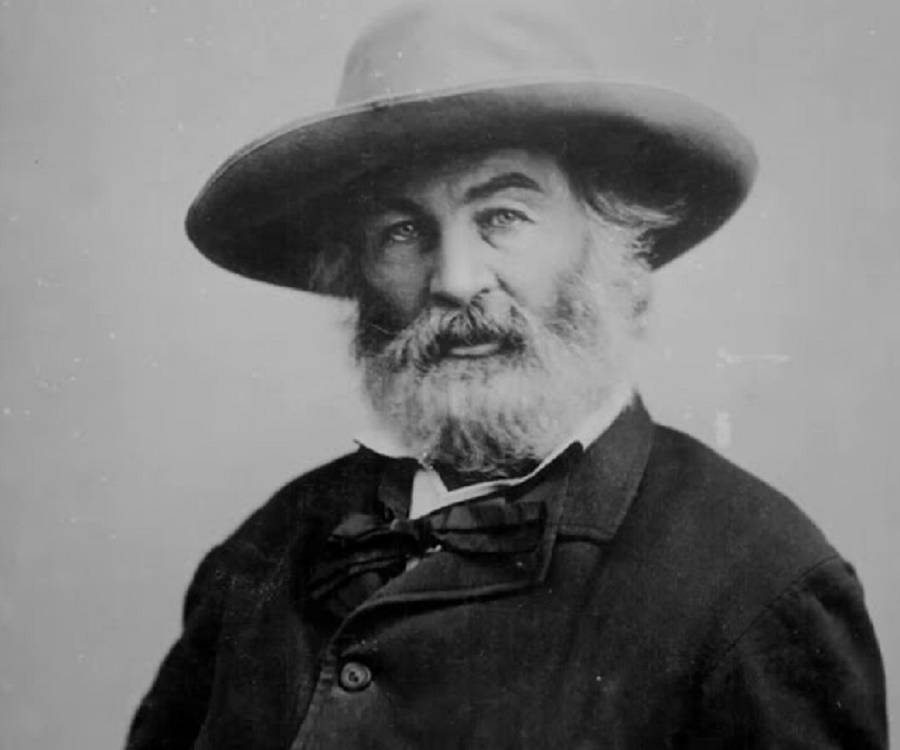
Like Alice I seemed to have fallen into a rabbit hole. Falling, falling, falling with images and sounds floating past me as I try to make sense out of all it. At one point I had a tab for each of the six versions of “Leaves of Grass” in the Whitman Archive and moved awkwardly from one to the other, trying to match them up to find changes the poet made as he moved toward the death bed version of his poem. Then, I couldn’t help myself; I had to see the man. What did he look like when he wrote the 1855 version? How did age along the way and what’s the last image of him we have? I was disappointed to discover that archive doesn’t have a photograph of Whitman after 1866. But later images of poet are easy to find.

The correspondence in the archive is currently limited to letters from Walt Whitman’s brothers Thomas Jefferson Whitman and George Washington Whitman. I enjoyed reading a few of them but realized they weren’t helping me to understand the poem … another rabbit hole.

But then I tumbled into another branch of the rabbit hole that informed and enhanced my reading of the poem. The archive has a large collection of contemporary reviews of Whitman's work and they are organized by edition of the poem. For me, part of understanding this work comes from learning how it was received at time it was written. The New York Daily Times finds the poem “too frequently reckless and indecent though this appears to arise from a naive unconsciousness rather than from an impure mind.” The critic quotes extensively from Whitman’s frontpiece and several of the poems are reprinted in this review. The reviewer is clearly not comfortable with much of Whitman’s language but closes by saying that an open minded reader “will discern much of the essential spirit of poetry” in Whitman’s work. I have always been told that Whitman’s work represented a huge change for poetry, that his work was a departure from the poetry of the day. I read several of the reviews and enjoyed exploring the critical response of his contemporaries.

Next, I will climb out of the rabbit hole and work exclusively with the 1855 digital copy of “Leaves of Grass”.

Thursday, September 3, 2009

RSS in the classroom

Students need to proof, edit and critique each other’s papers in composition classes; I think this could be managed through blogs and a class specific RSS. Assignments would be posted on individual blogs and the comment section would be used for, well, comments. Additionally, students could print out the essays and edit on them directly and bring them to class to exchange and discuss. This will require a different kind of management on the teacher’s part but it would not be difficult.

Tuesday, September 1, 2009

Thoughts after Thursday's readings and discussion

Today’s technology has reinvigorated the art of correspondence. E-mail, texting and Facebook have people using a QWERTY keyboard and the twelve keys or pads of their cells phone to communicate. My son and his peers write to each other much more than my friends and I ever did but at what price? I’ll admit I’m writing to friends and family too on all of the devices. For the most part, I use the rules of grammar, spelling, and punctuation I learned in elementary school but I must confess they are slipping away. My son told me I didn’t need to sign my text messages because he knew who was writing. He also could not understand why I bother with question marks, commas, and apostrophes. I realize texting and writing in Blogs and other on-line settings are not the same but I’m not sure everyone sees it that way. Bass and Rosenzweig note that “writing through on-line interaction,” allows for “joining literacy with disciplinary and interdisciplinary inquiry” (6) which is very exciting but I worry that in a student’s haste to participate they may not write carefully and thoughtfully. This is something that needs to be considered as we use technology in the classroom. At this point, I’m not sure how this will work. It’s something I hope to understand by the end of this course.

Bass and Rosenzweig discuss the importance of teaching “the critical evaluation of sources” (8) and “introducing students to the inquiry process” (10) before diving into use of web for accessing information. Is it safe to assume students will arrive at with this understanding or is this something we should be prepared to address in our classrooms?